In the world of project management, there are two critical terms that every aspiring project manager must know: Enterprise Environmental Factors (EEF) and Organizational Process Assets (OPA).
EEF and OPA describe the conditions and resources that shape a project and influence its success. Understanding these two concepts is crucial for any project manager who wants to deliver projects successfully.
This article will delve deep into EEF and OPA, their importance, and how they differ. We will also discuss the factors that impact EEF, examples of EEF in real-life scenarios and types of OPA along with some examples.
So sit tight and get ready to understand how utilizing EEF and OPA can help you become a better project manager and lead to successful project outcomes.
What are EEF and OPA?
EEF refers to conditions outside the project team’s control that can impact a project. They can be external, like laws and market trends, or internal, like company culture and available resources. OPA refers to the organization’s own assets, such as procedures, templates and lessons learned, that help manage projects.
Effective project management requires understanding both, as they can influence project success during planning.
Importance of EEF and OPA
Effective project management requires understanding internal and external factors that can impact the project’s outcome. Enterprise Environmental Factors (EEF) refer to conditions the team can’t control, like legal restrictions, marketplace conditions or organizational culture, while Organizational Process Assets (OPA) are internal assets like knowledge repositories or templates.
By considering both EEF and OPA during decision-making and the execution of management processes, a project manager can increase efficiency and improve overall performance with the help of a project management office.
Understanding Enterprise Environmental Factors
Understanding the conditions inside and outside your organization that can affect a project’s success is essential in project management processes.
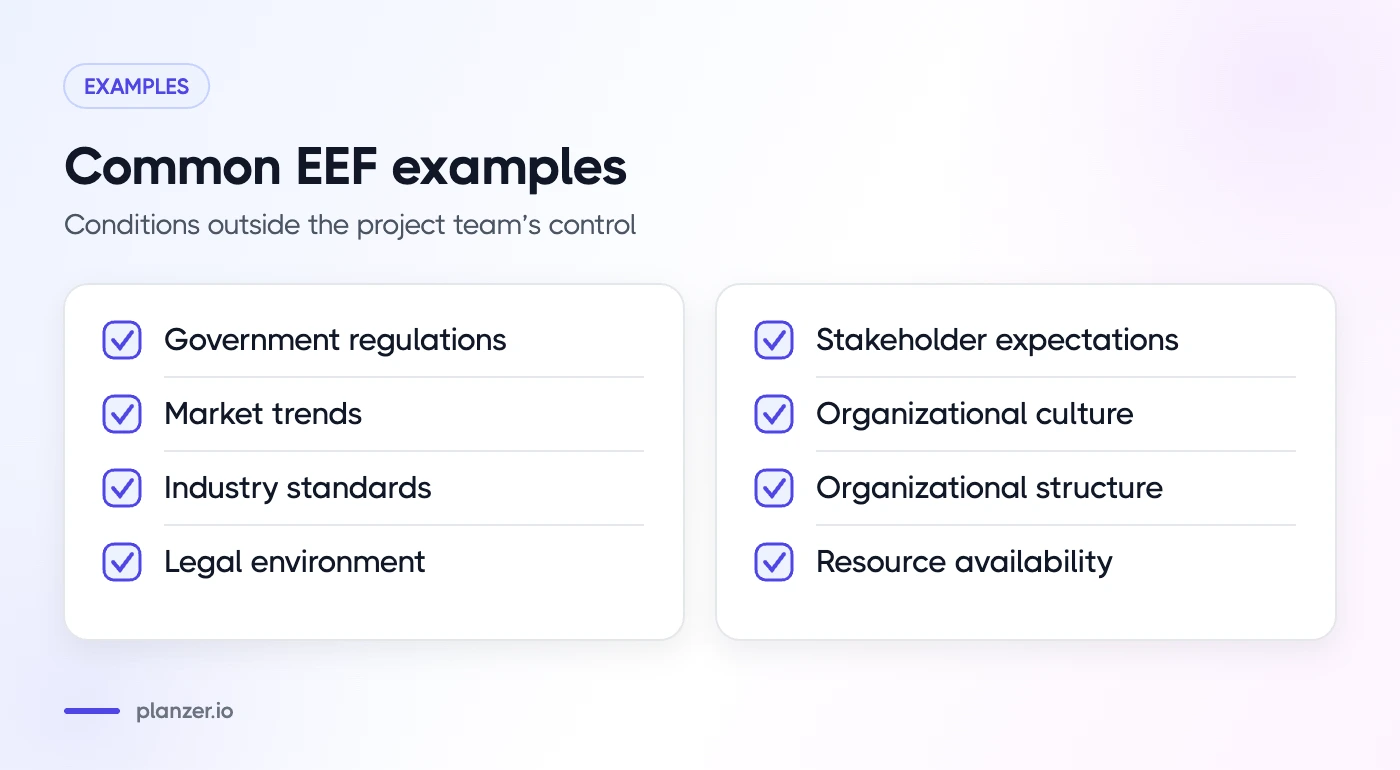
These factors fall under the purview of Enterprise Environmental Factors (EEF), which include government regulations, industry standards, and market trends, as well as internal conditions such as organizational culture and infrastructure.
On the other hand, internal tools such as Organizational Process Assets (OPA), including policies, procedures, and knowledge repositories, aid in managing projects effectively. Aspirants preparing for PMP or PMI-ACP exams must understand these concepts to perform better on the exam.
Factors impacting EEF
Enterprise Environmental Factors (EEF) that affect project management include government regulations, market trends, industry standards, legal environments and stakeholder expectations on the external side, and organizational culture, structure and resource availability on the internal side. Identifying and considering these factors is essential during project planning as they significantly impact the project’s success.
To manage projects effectively, there are internal Organizational Process Assets (OPA) such as procedures, templates, checklists and knowledge bases with lessons learned.
EEF examples
External EEFs, like legal restrictions, political climate and marketplace conditions, and internal EEFs, such as organizational culture, employee skills and resource availability, can influence a project’s success.
PMP aspirants can benefit from understanding the distinction between EEFs and OPAs. OPAs include templates, historical records, lessons learned and configuration management knowledge bases.
These assets help enable effective management of the project team and successful completion of project management processes.
Understanding Organizational Process Assets

Effective management of projects requires organizations to have Organizational Process Assets (OPA) such as templates, guidelines and policies.
These resources help project teams complete tasks efficiently while maintaining consistency. OPA is a vital component outlined in the Project Management Body of Knowledge (PMBOK), which guides managing processes for any performing organization.
Incorporating OPA into project management processes allows aspirants to succeed by following best practices and knowledge repositories.
Types of OPA
In project management, Organizational Process Assets (OPA) refer to an organization’s accumulated knowledge base, processes, and procedures. The PMBOK Guide (sixth edition) groups them into two categories: processes, policies and procedures (for example templates, guidelines and checklists), and organizational knowledge repositories (for example lessons learned, historical project files and issue logs).
Utilizing both types can improve management practices’ efficiency.
Leveraging historical information and lessons learned from past projects helps you set more realistic schedules and budgets and avoid repeating the same mistakes.
OPA examples
As an integral part of project management practices, Organizational Process Assets (OPA) comprise documented processes such as templates and guidelines used by the performing organization.
Additionally, they include knowledge repositories such as lessons learned and records from previous projects. Leveraging these assets can lead to improved efficiency of project management processes.
Differences between EEF and OPA
Enterprise Environmental Factors (EEF) and Organizational Process Assets (OPA) are crucial concepts in project management.
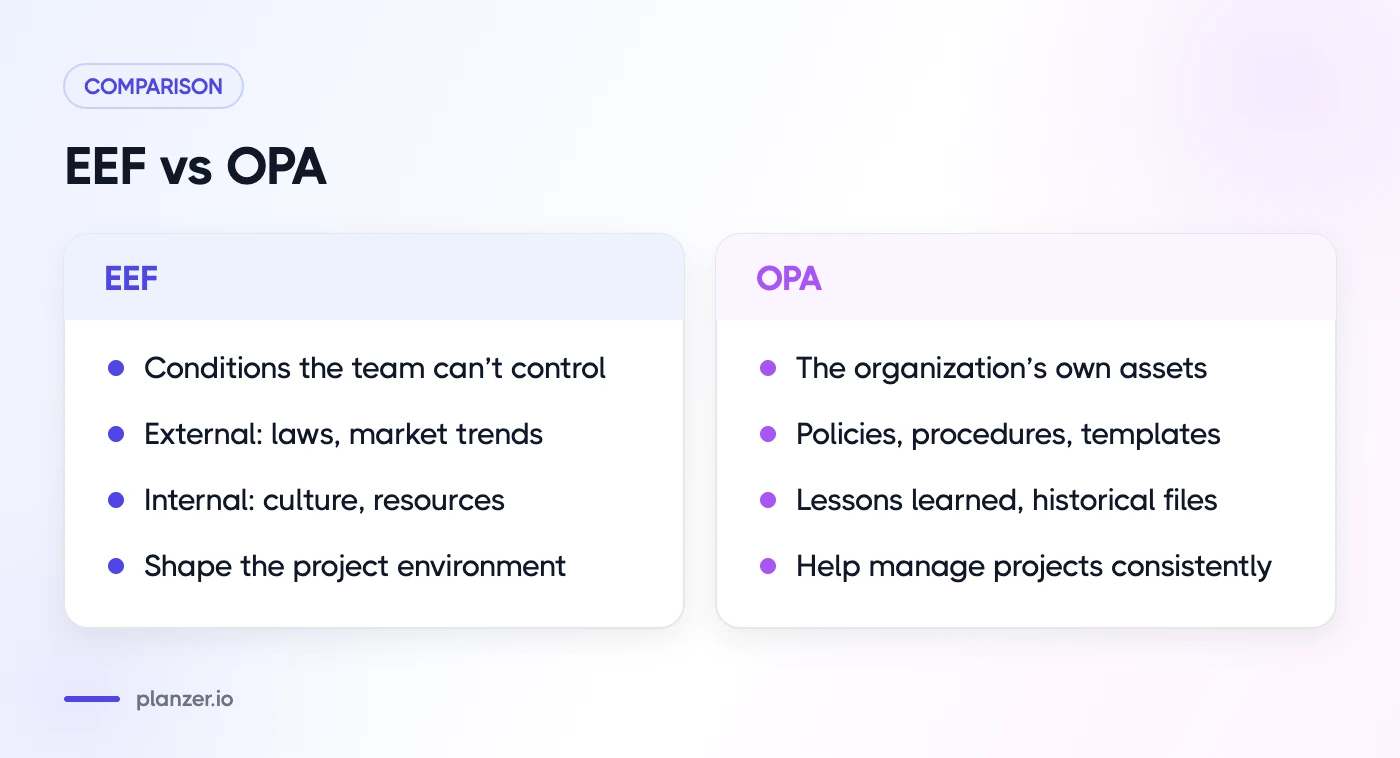
External EEF, like legal restrictions and market conditions, can impact the project environment, while internal EEF, like governance and organizational culture, can affect project management.
Meanwhile, OPA includes documented processes such as templates and guidelines that can help streamline project management processes. Proper utilization of these concepts will lead to improved outcomes for future projects.
Comparison between EEF and OPA
Effective management of a project requires understanding the differences between EEFs and OPAs. EEFs are conditions the project team can’t control, whether outside the organization (market conditions, legal restrictions) or inside it (culture, structure, available people). OPAs are the plans, processes and accumulated knowledge the organization owns, and the team can use and update them.
Both can impact a project’s success significantly. To manage a project effectively, it’s essential to consider both EEFs and OPAs during the planning phase.
Stakeholders can achieve better outcomes by understanding how these factors interplay with a project’s environment.
How Planzer.io helps you build your own process assets
You don’t need a large project management office to benefit from OPA. In Planzer.io you can save templates for recurring work, so proven checklists are reused instead of rebuilt each time.
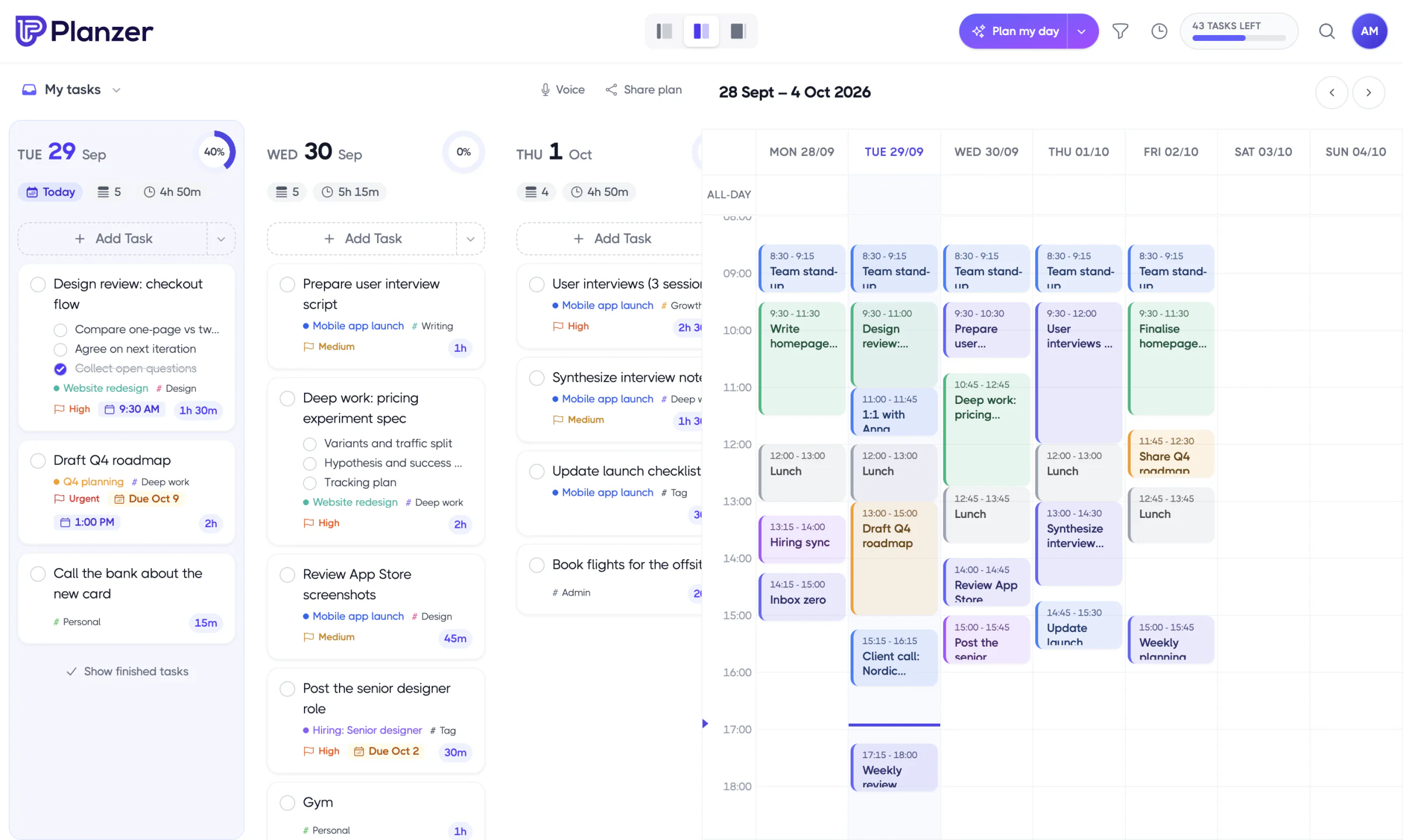
Projects in Planzer.io come with milestones and goals, so you can see how each project is progressing. Time tracking shows estimated vs actual time, giving you historical data to plan the next project more realistically, and the “Why tasks slip” analytics show what tends to get in the way, a personal version of lessons learned.
Conclusion
In conclusion, Enterprise Environmental Factors (EEF) and Organizational Process Assets (OPA) are critical elements that are crucial in project management.
EEFs are the conditions, internal or external, that the project team can’t control, while OPAs are the processes, templates and knowledge the organization owns and can improve. Understanding these factors is essential to ensure your project runs smoothly and stays on track.
By identifying the factors impacting EEF and the types of OPA available, you can better understand how to leverage these assets for successful project execution.
Want to go further? Read our guide to task management vs project management, or learn how to handle the most common project management problems.
FAQ
What is the difference between OPA and EEF?
In project management, EEFs are conditions the team can’t control, inside or outside the organization (such as laws, market conditions or company culture), while OPAs are the organization’s own processes, templates and historical data. Knowing the distinction is crucial for effective project planning.
What is an example of OPA and EEF?
OPAs are internal assets like policies and procedures that can impact project success. EEFs refer to conditions outside the team’s control, such as regulations, market conditions or organizational culture, that can also have an effect. Identifying and considering enterprise environmental factors and OPAs when planning a project is crucial to ensure its success.
What is OPA in project management?
In project management, OPA (Organizational Process Assets) refers to a company’s policies, procedures, and knowledge base that can impact project success. This includes templates, historical data, and lessons learned from previous projects.
Utilizing OPA, including organizational process assets, can enhance project efficiency and effectiveness by leveraging existing resources.
What are OPAs and EEFs?
OPAs are internal resources, like policies and templates, while EEFs are conditions outside the team’s control, like regulations, market trends or company culture. Both impact project success and must be considered during planning. Effectively using OPAs and EEFs, organization process assets, can improve project management efficiency.