


As a student, time management is essential. Proper time management helps you manage your workload, stay focused, and achieve your goals. In this blog post, we’ll take a look at how time management affects students, the different ways to improve concentration and focus, and 5 tips for effective time management. Start organizing your time and see the benefits for yourself!
How time management affects students
Time management skills are essential for students of all ages. When used correctly, they can help students focus better and stay organized. This, in turn, leads to faster achievement of goals and a better understanding of the material being studied. In order to use time management skills effectively, students need to be able to manage their time wisely. This may seem impossible at times, but with a little practice, it will become second nature. Additionally, if students are not able to learn efficiently, it can have a negative impact on their academic careers. So, make time management a top priority and see the impact it has on your academic success!
Ways to improve concentration and focus with time management
Studying is hard work, and managing time is essential for success. If you want to achieve good grades, stay on top of your studies, and have enough time for fun and social activities, you need to be good at time management. Here are some simple tips that can help you get the most out of your time:
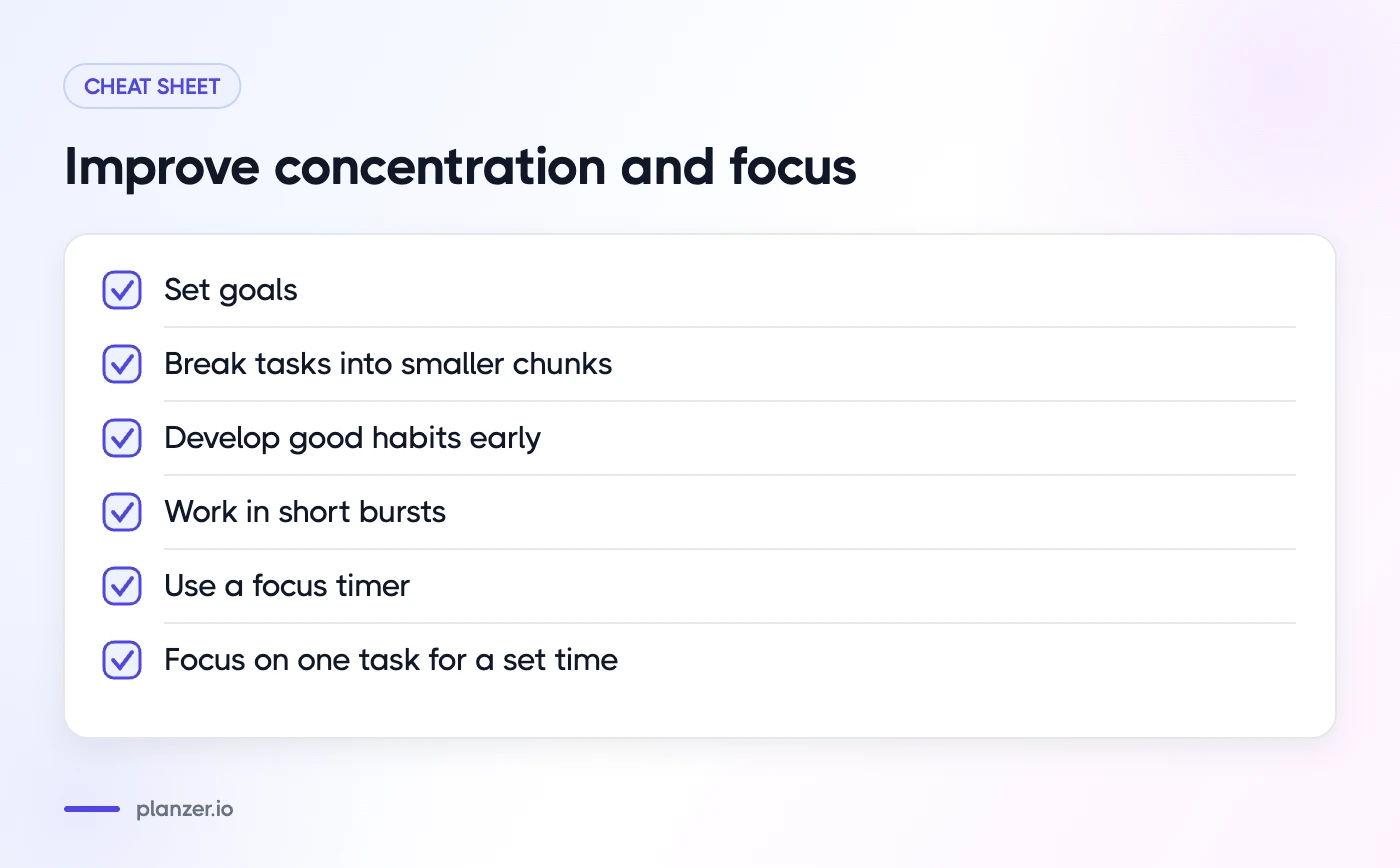
- Set goals. By establishing goals, you’ll be able to better plan your time and track your progress.
- Break down tasks into smaller chunks. This will help you focus on the task at hand and avoid feeling overwhelmed.
- Develop good habits. By forming good time management habits early on, you’ll be less likely to fall victim to procrastination.
- Work in short, focused bursts. Use a focus timer, or commit to one specific task for a set amount of time, then take a short break. Use whatever works best for you.
How to set a schedule and stick to it
Studying is hard enough as it is. Adding time management into the mix can make it even more challenging. Make sure each day has specific goals, and don’t let yourself get overwhelmed by the task at hand. There are many different ways to set a schedule and stick to it, from a simple to-do list to time blocking, where you give each task its own slot in your calendar. Find what works best for you, and make sure to plan ahead to minimize distractions. By focusing on time management, you’ll be able to study efficiently and reach your goals.
5 tips for effective time management
Between classes, assignments, exams, a job and a social life, time runs out fast. Follow these 5 tips to get started.
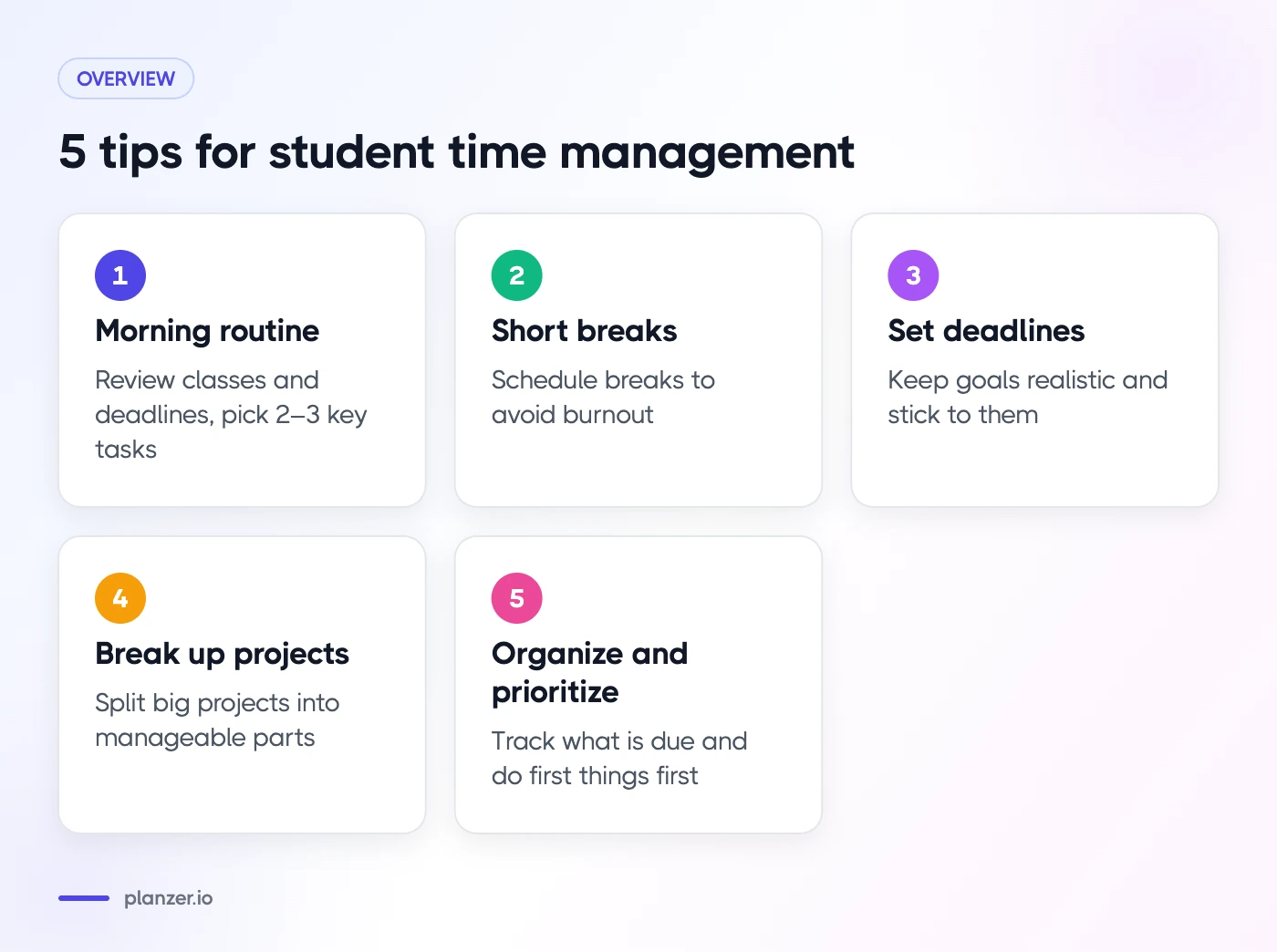
1. Establish a morning routine
Setting up a morning routine can help you study more effectively. Start each morning by looking at your classes, deadlines and study sessions for the day, and pick the two or three tasks that matter most. By dividing your work into manageable chunks and staying focused throughout the day, you’ll be able to get the most out of each session. Make sure to set aside time for breaks and relax after working long hours – studies are not worth sacrificing your health for! Time management apps or tools can also be very helpful in keeping track of progress and staying on schedule. When it comes to studying, setting realistic goals is essential so that you know when you’re making good progress and when there’s still room for improvement. Finally, getting organized will make studying much easier since everything will be in the place where it belongs – no scrambling around looking for materials!
2. Take short breaks throughout the day
Taking short breaks throughout the day is essential to avoiding burnout. When you’re studying, make sure to schedule time for short breaks that allow you to relax and wind down. This will help your mind be more alert when it comes to learning new information later on. Aside from taking regular breaks, use apps, websites and other tools that can help speed up your learning process. For example, using flashcards or quizzes regularly can improve your retention of information learned in class. Make sure all of these resources are effective for you so that you can boost your academic performance! Lastly, don’t forget about setting realistic goals for each class – this way you won’t feel overwhelmed and stressed every time a new challenge arises. Breaking them down into manageable tasks will also make the learning process less daunting.
3. Set deadlines for tasks
Deadlines are key when it comes to succeeding in any task. Setting realistic, achievable goals and sticking to them will help you stay on track. Make a schedule that includes time for breaks and allows enough time for revisions if necessary. Tackle tasks one at a time by breaking them down into smaller, more manageable parts. Try using tools such as Pomodoro Timers or Mind Maps to aid in this process. And lastly, find ways to relax your mind so that studying doesn’t become an overwhelming task – this can be done through meditation or yoga, among others.
4. Break up larger projects into manageable parts
Breaking up a larger project, like an essay or a thesis chapter, into manageable parts helps you stay focused and on track. For an essay, the parts might be: research, outline, first draft, edit and references.
- Give each part its own deadline and stick to it as closely as possible, so the whole project is finished on time.
- Use the Pomodoro Technique to work on each part in focused 25-minute sessions with short breaks in between.
- Use timers or alarms on big projects so you don’t lose hours to procrastination.
- Ask for help with smaller chores during busy weeks, such as sharing cooking with housemates before an exam, so you can focus on the bigger picture.
5. Stay organized and prioritize
Staying organized is key to success in any field, and studying is no exception. By getting organized, you can save time and avoid wasting energy on tasks that don’t need to be done. Start by creating folders for each class and keeping track of what is due and when. This way, you will be able to identify your priorities and make informed decisions about what needs to get done first. Next, come up with a plan – know exactly which steps you need to take and when you’ll do each one. Be realistic in your estimates of how long things take, so your plan actually fits in your week. Finally, stick to deadlines – if something isn’t completed on time, look at why and adjust your plan for next time. If you’re new to planning, these tips to get started with a daily plan are a good place to begin.
How Planzer.io helps students manage their time
Planzer.io is a daily planner that puts your assignments, deadlines and calendar in one place. Each morning, Plan my day shows you what’s due, what’s overdue and which classes you have, and helps you schedule study sessions in the free slots between them. You can break a big assignment into subtasks, add estimates, and use the built-in focus timer for 25-minute study sessions with a five-minute “Take five” break. The free plan covers 100 tasks, and it works on the web, iPhone, iPad, Apple Watch, Android, Mac, Windows and Linux – read more about Planzer.io for students.

Conclusion
Studying is a time-consuming task, and without effective time management skills, it can be hard to get the most out of your educational experience. By following the tips mentioned in this blog, you can improve your concentration and focus, set a schedule, and stick to it. Make sure to read through the blog again and take note of the tips that are most applicable to you. With time management skills, you’ll be able to achieve your goals and maximize your educational experience!
FAQ
Are there any tools or apps available that can help me manage my time more effectively?
There are many time management tools and apps available. A simple calendar and to-do list is a good start. A daily planner like Planzer.io combines both, so you can see your classes and deadlines and plan study time around them.
What are some tips for time management that students can use to keep their schedules organized?
Students can use time management tips to help keep their schedules organized by setting realistic goals and breaking down those goals into smaller tasks. Additionally, students should create a to-do list and schedule time for tasks according to priority.