


Are you finding it harder and harder to get started with your tasks? Do you find yourself putting things off until the last minute, only to feel overwhelmed and stressed? If so, it might be time for you to reconsider your daily routine. A daily plan can help you stay on track and achieve your goals by dictating what you should be doing and when. By following a simple plan, you’ll not only be more productive, but you’ll also find it easier to resist the temptation to procrastinate. So read all the tips you need to make the best of a daily plan!
Why You Should Stick To A Daily Plan
Sticking to a daily plan is important if you want to achieve success. By establishing a routine, you’ll be less likely to be distracted and more productive. Planning the same way every day can feel repetitive at first, but consistency is what makes it work over time. A daily plan is the best way to stick to your goals and stay on track. Make sure the plan is realistic and easy to follow so you don’t get overwhelmed or lose motivation. If the routine seems too hard, try breaking it into smaller goals that you can achieve easily. And lastly, avoid falling into ruts by ensuring the daily plan is flexible enough to account for life’s little surprises.
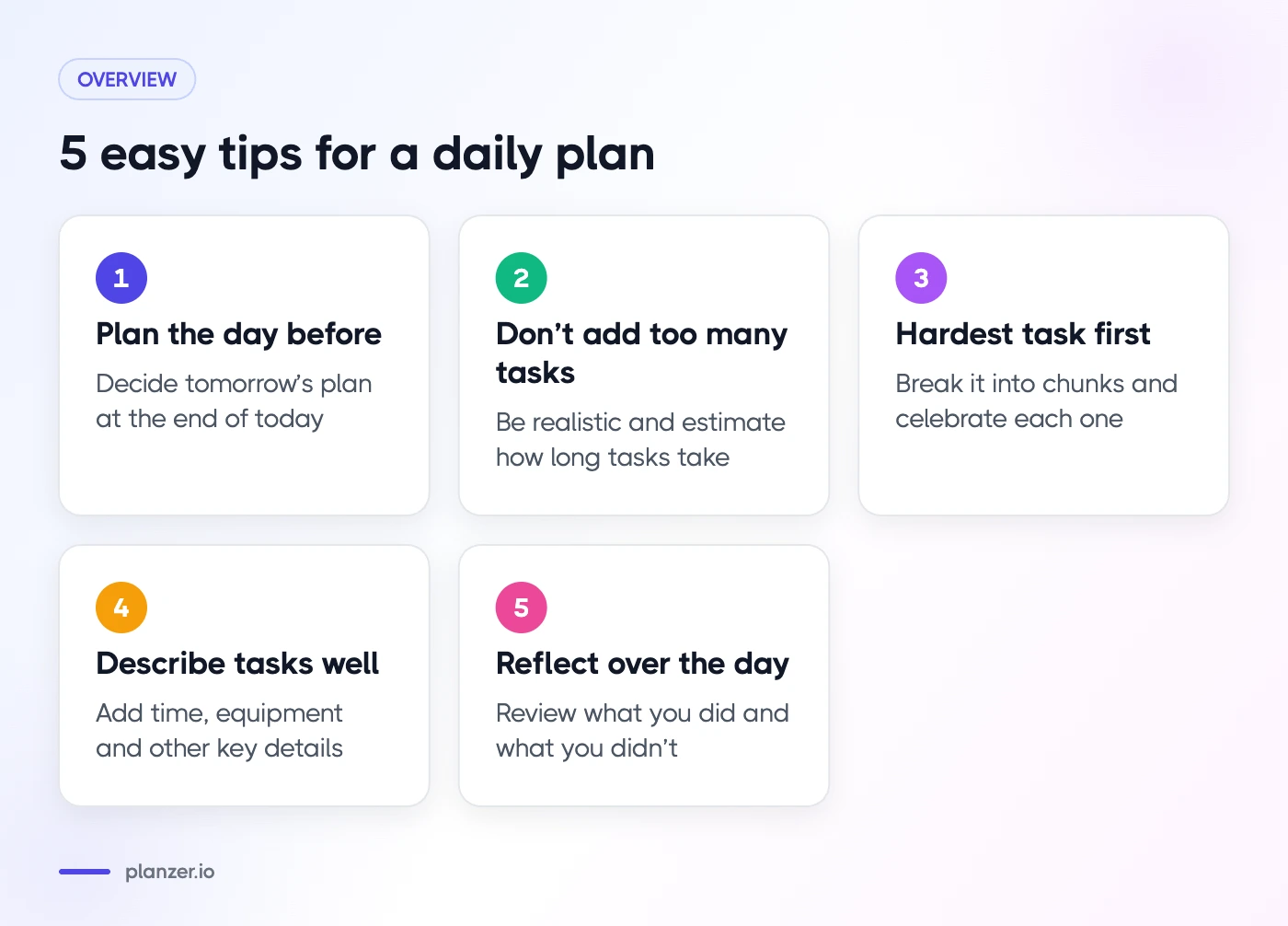
Tip 1: Plan The Day Before
Planning your day is key to maximizing your productivity. Take a few minutes at the end of each workday to decide what tomorrow should look like, so you can get started right away the next morning. By setting goals for the day and creating a timeline based on those goals, you’ll be able to stay focused and organized. Tools like planners and focus timers can help you stay on track. If evenings don’t suit you, planning first thing in the morning works too – what matters is that you start the day with a plan.
Tip 2: Don’t Add Too Many Tasks
Too many tasks can lead to stress and less time for yourself. Instead, focus on fewer, more important things. Be realistic about what you can achieve each day and plan accordingly. Estimating how long each task will take makes this much easier. Break your tasks down into smaller, more manageable chunks and ensure that each one is important to you. Finally, try to avoid adding tasks that you cannot realistically complete in the time allotted. By following these simple tips, you’ll be on your way to a more productive and stress-free day!
Tip 3: Start With The Most Difficult Task
The third tip for becoming successful is to start with the most challenging task. This will help you overcome any barriers you might have and get your day-to-day tasks done much faster. To make this easier for you, break the task into smaller, more manageable chunks. When you finish a chunk, celebrate! This will help you feel good about yourself and motivate you to keep going. Remember, success is a daily process – start with the most challenging task and keep moving forward.
Tip 4: Describe Your Tasks Well
Task writing can be daunting, but it’s essential to do it well to ensure the success of your project. When writing, include essential details such as the time and equipment you’ll need. Additionally, add some pics or sketches of the task to help illustrate what needs to be done! Making your tasks easier to understand and follow by breaking them down into smaller, more manageable pieces will also help make the process smoother.
Tip 5: Reflect Over The Day
It’s time to reflect on the day and appreciate all the good that came your way. Look at the things you accomplished, and at the things you didn’t manage to do and why. Pat yourself on the back and prepare for tomorrow with a plan to improve upon your successes and avoid the same mistakes. Get some rest and enjoy your time tomorrow – you deserve it!
How Planzer.io helps you plan your day
Planzer.io is a daily planner that puts these tips into practice. Plan my day guides you through a short routine each morning: a briefing with today’s tasks, overdue work and meetings, then picking and scheduling what you’ll work on. Estimates on tasks help you avoid overfilling your day, and “Plan it for me” fits tasks into the free slots between your meetings within 09:00–18:00. As you work down the list, each task shows a start and end time, plus a “Done around …” finish time that turns amber if your plan runs past your shutdown time.
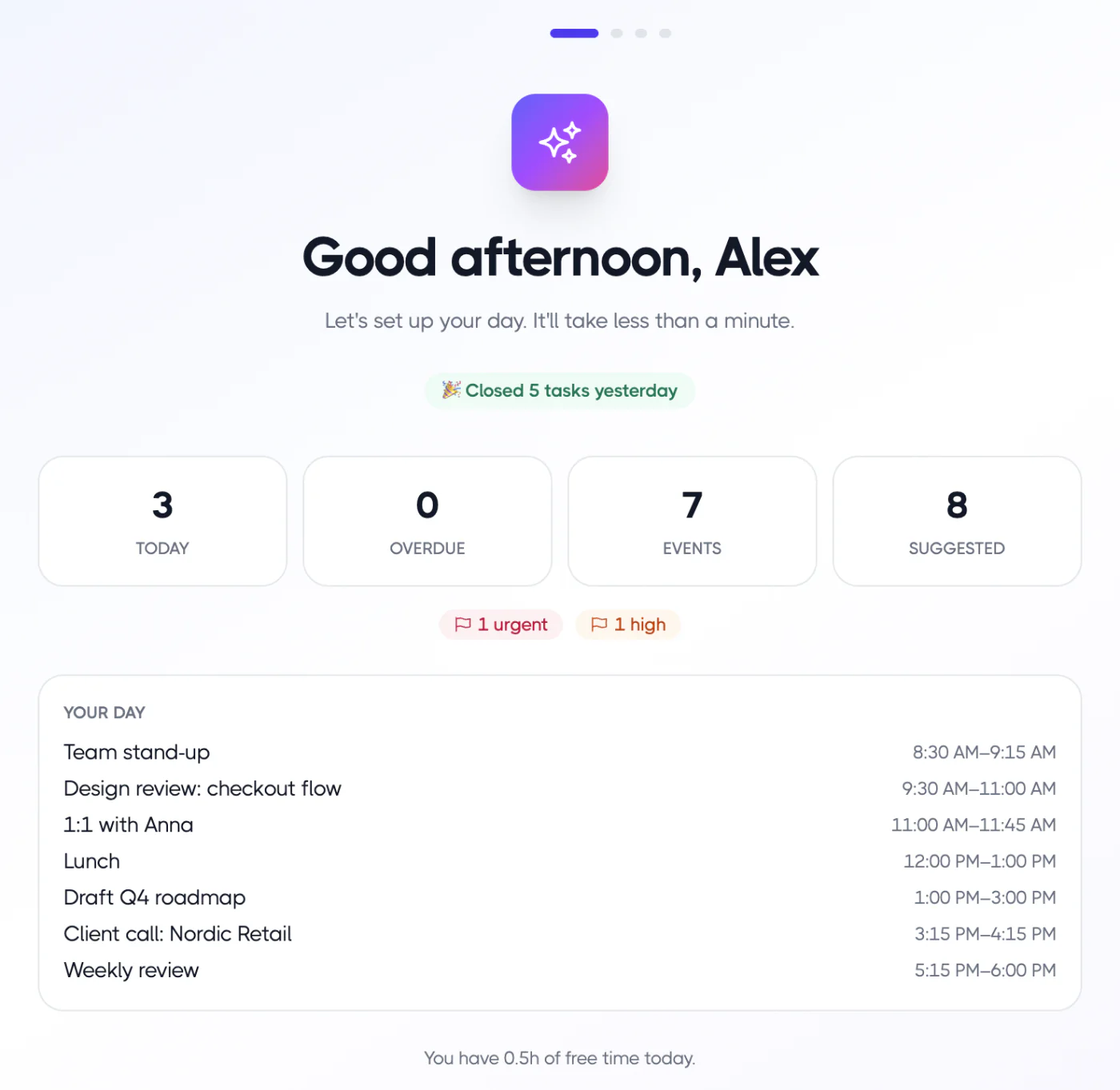
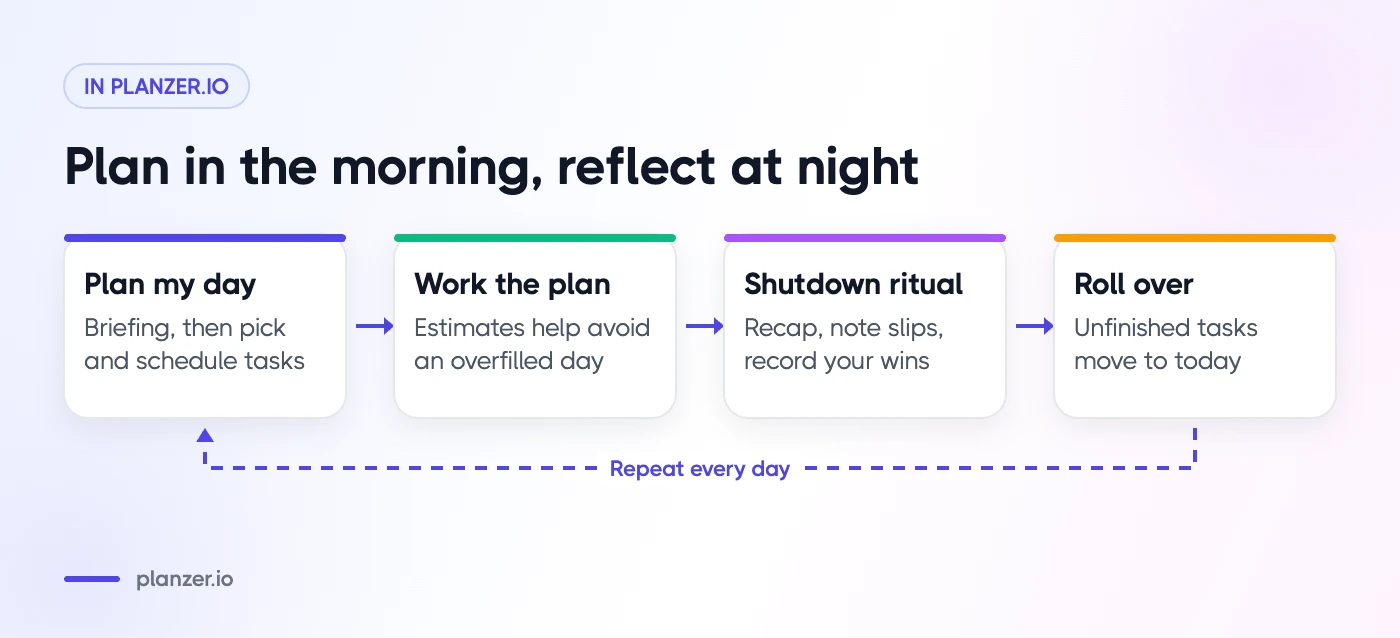
At the end of the day, the “Wind down the day” shutdown ritual asks for your wins and what got in the way, lets you rate your energy from 1 to 5 and tag why unfinished tasks slipped. Anything you didn’t finish rolls over to today automatically overnight, and the next morning “Plan my day” shows it in its carry-over list. You can also add subtasks, descriptions and, on Pro, file attachments, so every task is well described.
Conclusion
Sticking to a daily routine can help you achieve your goals faster and more efficiently. Following the tips outlined in this blog, you can plan and execute your day with less stress and chaos. Once daily planning feels natural, find out whether you should plan your day or your week. Thanks for reading, and we hope you find the tips helpful!
FAQ
What is a daily plan?
A daily plan is a plan that outlines what an individual or team will do each day to achieve their objectives.
Can I create a daily plan for work as well?
Yes, you can create a daily plan for work. However, it is essential to remember that a daily plan is only a guideline and should be adapted as needed.
Why is having a daily plan beneficial?
A daily plan gives you clear goals and a plan of action for the day. When you break your day into smaller tasks, it becomes easier to focus on what you need to do, and you spend less time deciding what to work on next.
How can I create a daily plan that is effective for me?
We all work in different ways, and the best way for you to find out is by trying numerous methods and ways to plan. Start by planning the day before. If that doesn’t work, then try and plan every morning, or maybe every Sunday you plan your week. You need to try to find the proper method that works for you.
Can I use a daily plan to keep track of my goals?
You can use a daily plan to keep track of your goals as long as you have a dedicated space for writing down your goals and an ongoing way to ensure that you are meeting your goals.